The OEM’s Core Challenge: A Channel You Can’t See
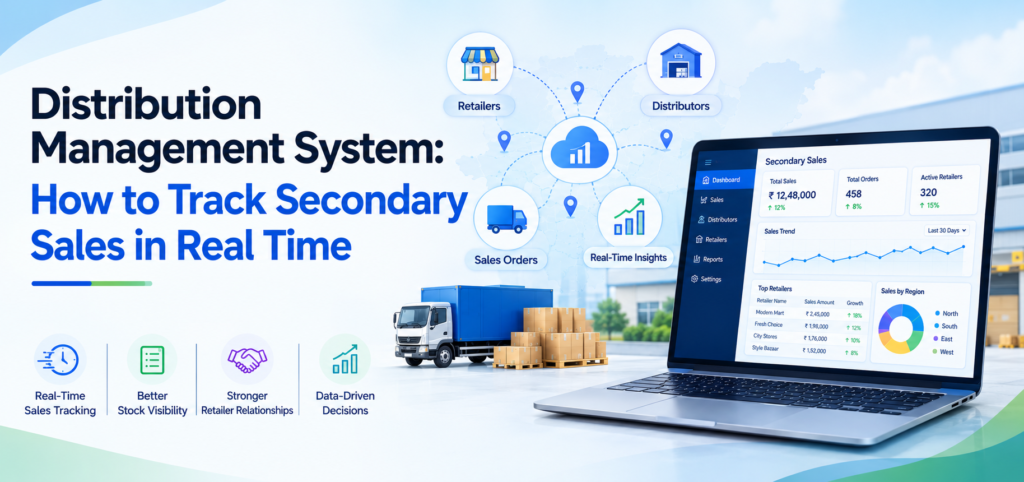
For an FMCG or building-materials brand, shipping products is not the same as knowing what is selling. This is exactly the gap a modern distributor management system is built to close.
An OEM can always see primary sales what moved from the company to its distributors. But what happens after that dispatch often stays fragmented across distributor billing systems, spreadsheets, and delayed reports.
For FMCG brands, this creates blind spots around secondary sales, batch movement, expiry risk, stock ageing, and scheme claims. For building materials companies, the challenge goes further covering dealer-level demand, inventory hoarding, multi-unit measurements, godown stock, credit exposure, and outstanding balances.
The typical cycle looks like this: primary dispatch → distributor inventory → delayed reporting → manual reconciliation → reactive decision-making.
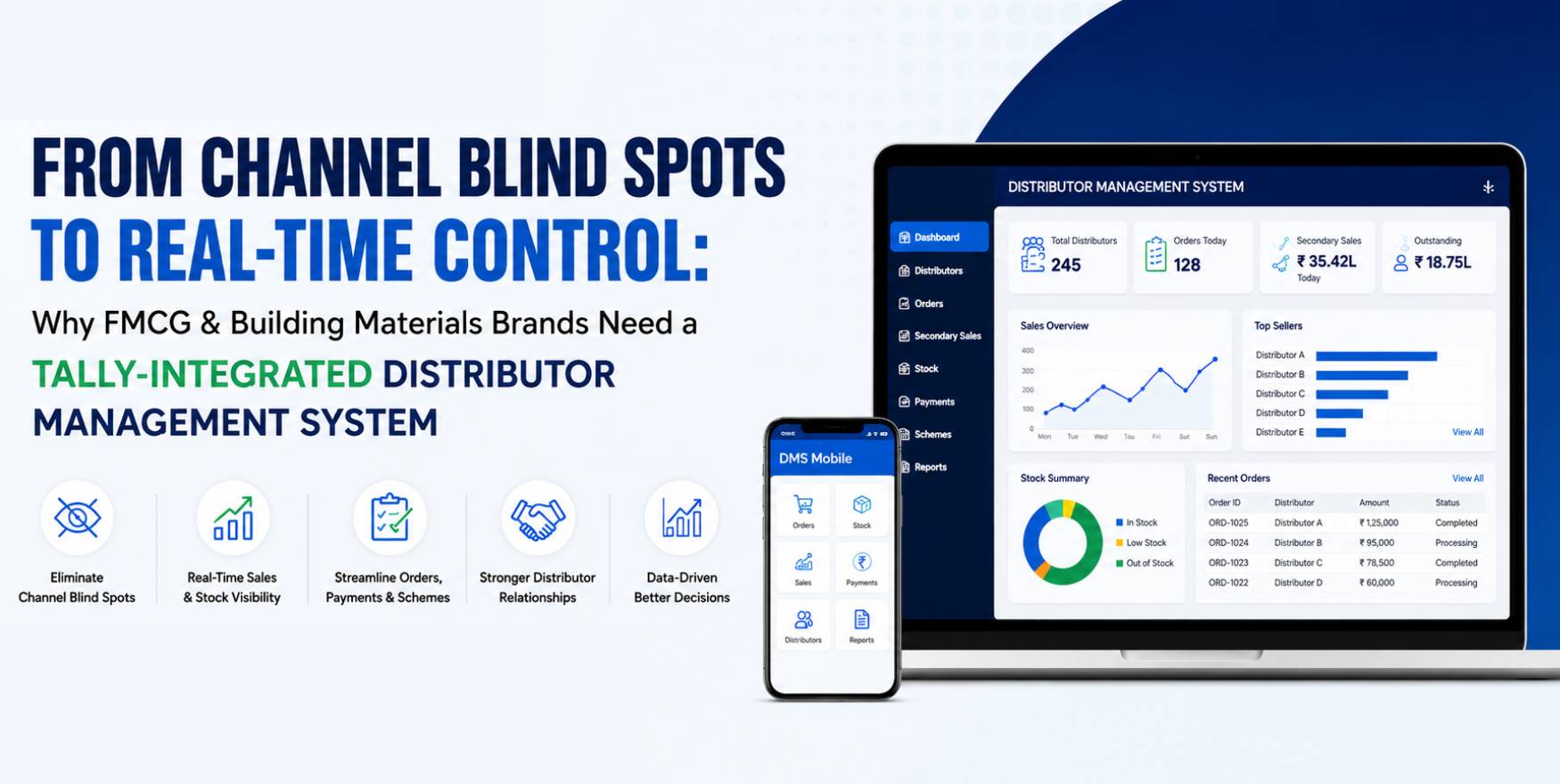
A modern distributor management system (DMS) breaks this cycle by creating a centralized layer through which brands can monitor distributor sales, inventory, orders, claims, schemes, and overall channel performance. But there’s one major adoption hurdle: the distributor already has a system and it’s usually Tally.
Why DMS + Tally Integration Is Non-Negotiable
Tally is deeply embedded in the daily billing and accounting workflows of most Indian distributors. Any effective distributor management strategy must work with this reality, not against it.
If an OEM asks distributors to enter every transaction into both Tally and a new DMS platform, adoption suffers immediately. Duplicate data entry leads to delays, inconsistent records, and pushbacks from channel partners.
The smarter approach is to connect systems rather than replace them. A Tally-integrated distributor management system lets distributors keep working in their familiar accounting environment while relevant transaction data flows automatically to the OEM’s central platform.
Tally continues to manage the distributor’s day-to-day transactions. The DMS gives the OEM real-time channel intelligence and control. The outcome: less friction for distributors and dramatically better visibility for the brand.
5 Strategic Benefits for FMCG & Building Materials OEMs
1. Live Secondary & Tertiary Sales Visibility
Primary sales answer one question: what did we sell to the distributor? Secondary and tertiary sales answer the far more important one: what is moving through the market?
With Tally-connected data feeding into the distributor management system, OEMs can track distributor-to-dealer and dealer-to-retailer movement, SKU velocity, territory performance, and consumption trends. For FMCG, this separates genuine market demand from distributor overloading. For building materials, it reveals dealer-level movement across cement, tiles, paints, electricals, and hardware replacing periodic Excel reports with current, actionable channel data.
2. True Stock, Batch, Expiry & Multi-Unit Inventory Control
A dispatch report shows what entered the channel; it doesn’t show where that inventory sits today. A well-integrated distributor management system gives OEMs visibility into distributor and godown-level stock, fast- and slow-moving SKUs, stock ageing, batch and expiry exposure, emerging stock-outs, excess inventory, and regional imbalances.
For FMCG, this supports FEFO/FIFO-based decisions and stronger expiry management. For building materials where inventory is tracked in bags, boxes, pieces, square feet, or metric tons a DMS standardizes these views while preserving the distributor’s original transaction data. Replenishment decisions can finally be based on actual channel inventory, not assumptions.
3. Automated Schemes, Claims & Credit Management
As a distribution network grows, trade schemes, rebates, and claims become harder to manage manually leading to disputes, incorrect calculations, duplicate claims, and poor auditability.
A robust distributor management system links scheme rules directly to real distributor transactions, creating a structured process for eligibility, validation, and settlement. When Tally ledger and outstanding-balance data feeds into the DMS, OEM teams gain clear visibility into distributor exposure instead of relying on delayed statements. For building-material brands, where dealer credit is a major commercial lever, this capability is especially valuable: automate the transaction, validate the claim, control the credit.
4. Smarter Demand Forecasting & Logistics
Forecasting based on primary sales alone can be misleading. Inventory loading by distributors can look like rising demand, while a distributor stock-out can mask genuinely strong underlying demand.
By connecting distributor sales and inventory data into the distributor management system, OEMs get richer, more accurate demand signal improving production planning, replenishment decisions, inventory allocation, route and logistics planning, regional stock positioning, and working-capital management. For FMCG brands, this means faster responses to SKU-level and seasonal shifts. For building materials, it helps align production and logistics with dealer demand across dispersed geographies. The DMS becomes a genuine downstream demand signal for the supply chain, not just a sales-reporting tool.
5. Zero-Friction Distributor Adoption
Even the most sophisticated distributor management system delivers little value if distributors don’t use it consistently. This is where Tally integration matters most strategically.
Rather than asking distributors to overhaul their accounting workflow, the OEM connects the DMS to the system distributors already trust. Sales invoices, stock movements, returns, and other agreed data flow automatically, cutting duplicate entry and manual reporting. The logic is simple: less distributor effort leads to better data quality, which drives higher DMS adoption, which in turn gives the OEM a more complete view of the market. The more distributors connected, the sharper that picture becomes.
How the Tally–DMS Data Flow Works
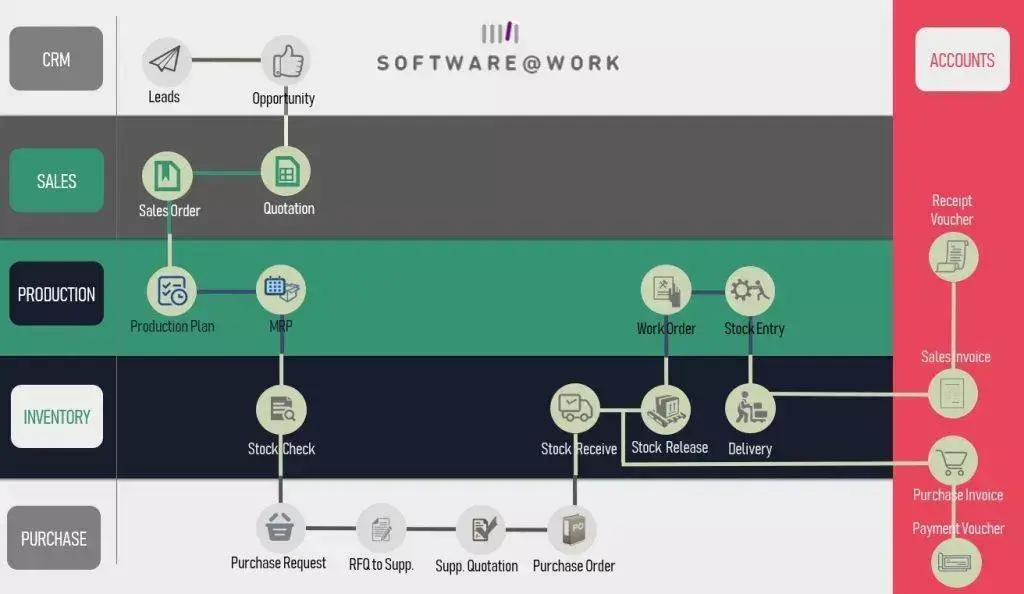
The integration builds a bidirectional bridge between the distributor’s Tally environment and the OEM’s distributor management system.
Tally → DMS: Sales invoices, sales quantities, stock movements, purchases, returns, retailer transactions, and other approved operational data flow into the central platform.
DMS → Tally: The OEM can push relevant product masters, price lists, customer information, schemes, and other approved updates back to the distributor.
The exact architecture varies by business and Tally setup, but the objective stays constant: capture distributor activity automatically, eliminate duplicate entry, and give the OEM a timely, structured view of the channel.
From Reactive Distribution to Real-Time Channel Control
For FMCG and building materials brands, competitive advantage no longer comes from simply getting products into the distributor network. It comes from knowing what happens after the shipment and acting before a problem reaches the market.
A distributor management system provides a channel-control layer. Tally integration makes that layer practical at scale, connecting OEMs to distributor data without disrupting the workflows distributors already rely on.
The shift is clear: delayed reports, manual reconciliation, and reactive decisions give way to connected data, real-time visibility, and proactive action.
If your brand still depends on periodic distributor reports to understand secondary sales, inventory, claims, and dealer demand, it’s time to rethink your distribution architecture. Connecting your distributors’ existing Tally ecosystem with a distributor management system turns fragmented channel data into real-time commercial and supply-chain intelligence.
FAQs
1. What is a distributor management system (DMS)?
A platform giving brands real-time visibility into distributor sales, inventory, orders, claims, and schemes.
2. Why is Tally integration important for a DMS?
It lets distributors keep using Tally while avoiding duplicate entry and boosting adoption.
3. What data flows between Tally and the DMS?
Sales, stock, and returns flow to the DMS; product masters, prices, and schemes flow back to Tally.
4. How does a DMS help with demand forecasting?
It combines real secondary sales and inventory data for more accurate demand signals.
5. Is Tally integration difficult to set up for distributors?
No — it runs in the background with zero change to how distributors work.